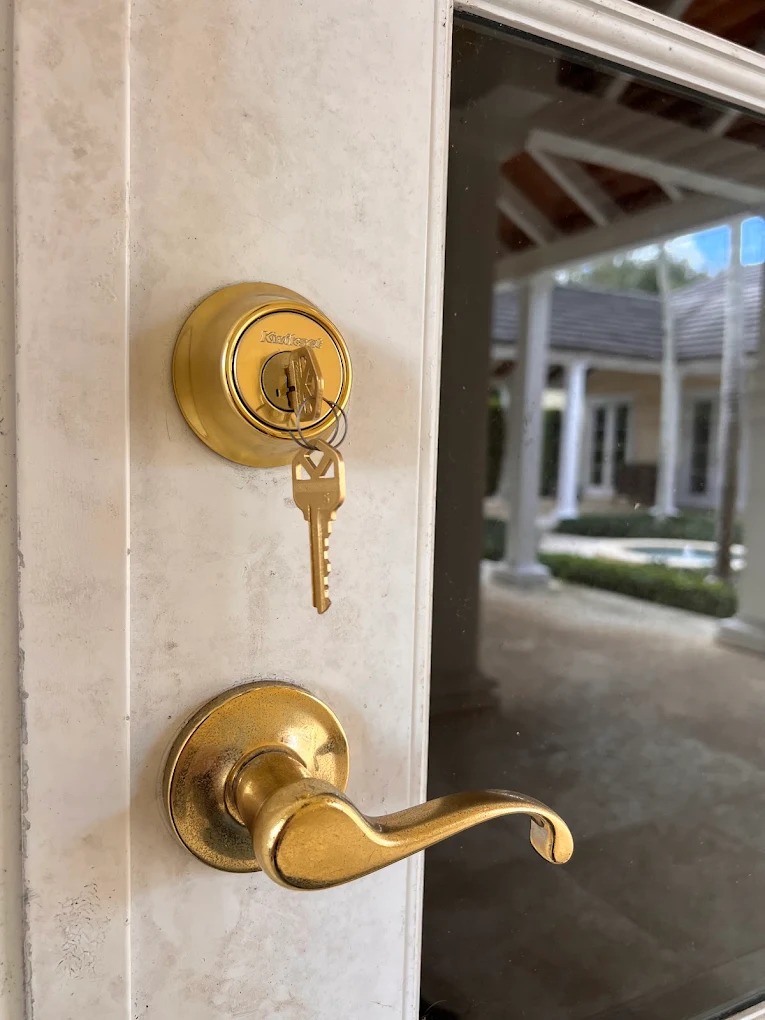
You unlocked the shop at 6am, propped the door, and now it won't pull shut behind you. Eight common reasons and what to check first before paying for a service call.
Nine times out of ten, a storefront door that won't close all the way comes down to one of four things: a failing door closer (hydraulic fluid leak or worn spring), a sagging top pivot or continuous hinge, a swollen threshold from Florida humidity, or strike plate misalignment after the building settled.
Fastest field test - watch the door close from open. If it slams the last two inches, your closer's latch speed is wrong or the spring is shot. If it stops two inches short, it's hinge sag or a worn pivot. If it binds anywhere mid-swing, the threshold or sweep is fouling.
If you're standing there at 6am with the alarm beeping and customers about to walk in, call Doctor Lockout at (772) 284-5142. We carry LCN 4040, Norton 7500, and Sargent 281 closers, plus pivots and continuous hinges on the truck for one-visit commercial door repair across Port St. Lucie and the Treasure Coast.
Before you touch a screwdriver or pick up the phone, stand outside, open the door 90 degrees, and just watch it close on its own. The way it fails tells you exactly which part is broken.
That one minute of observation saves about $40 of diagnostic time on the invoice, and it lets you tell a locksmith on the phone exactly what to bring on the truck.
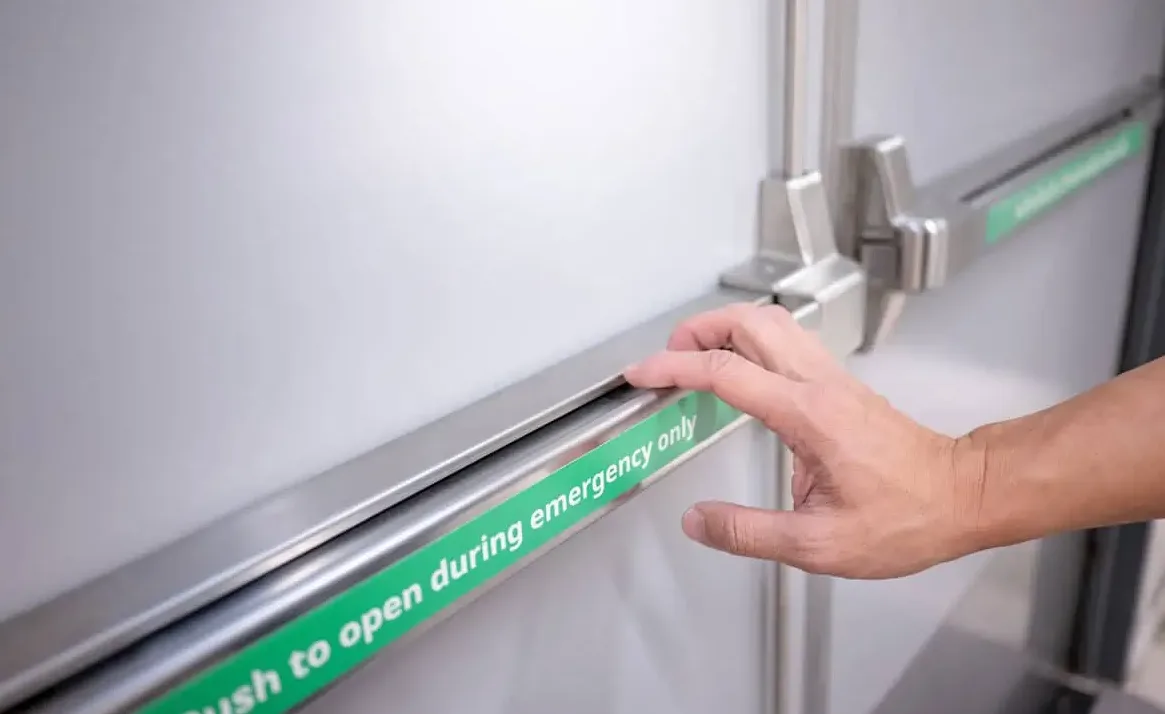
Roughly 70% of "won't close" calls we run in Port St. Lucie are door closer problems. The closer is that arm-and-piston unit at the top of the door frame, and it does three jobs: pulls the door shut, controls the speed, and seats the latch.
The three models you'll see on 95% of PSL storefronts:
The two adjustment valves are typically marked with a small "S" (sweep speed, the main close) and "L" (latch speed, last 10 degrees). Turn clockwise to slow down, counter-clockwise to speed up. Quarter-turn at a time - any more and you'll blow past the sweet spot. If the door still won't seat after both valves are at their stops, the spring is shot and the unit needs replacement.
Florida note: closer hydraulic fluid thickens in winter cold snaps below 50F and thins to syrup in 95F humidity. A closer that worked fine in February might overshoot or undershoot by July. We see this constantly along Hutchinson Island and on the Sandpiper Bay side where buildings face open water.
| Symptom | Likely Cause | DIY Fix? | Locksmith Visit |
|---|---|---|---|
| Door closes too fast then slams | Closer hydraulic too aggressive | Adjust valve - if you have the wrench | Yes - 20 min adjust |
| Door closes too slow / stops short | Closer fluid leak or worn spring | No | Yes - rebuild or replace |
| Door drags on threshold | Hinge sag or threshold height | Sometimes - tighten hinge screws | Yes if hinges need replacement |
| Door won't latch | Strike-plate misalignment | Sometimes - shim strike | Yes - re-cut strike if needed |
Aluminum and glass storefront doors are heavy - 90-130 pounds. They hang on either a top pivot (a single point at the top corner, with a floor pivot or bottom pivot at the bottom) or a continuous geared hinge running the full height.
When a door sags, the latch edge drops 1/8 to 1/2 inch, which means the latchbolt no longer lines up with the strike. The closer can pull the door to within an inch of the frame, but the latch tongue jams against the strike plate face instead of dropping into the strike box.
Quick check: stand inside, close the door slowly by hand, and look at where the latchbolt meets the strike. If the bolt is scoring a fresh mark below the strike hole, the door has dropped.
Fixes by hinge type:
See our pivot hinge repair and continuous hinge repair service pages for what we keep on the truck.
Real locksmith, real ETA, honest price quoted before any tools come out. 15-30 minute arrival across the Treasure Coast.
Call (772) 284-5142Florida humidity is the unsung killer of storefront thresholds. Aluminum thresholds with vinyl inserts swell with moisture, and the rubber door sweep at the bottom can roll under or get torn by the constantly-shifting threshold edge.
You'll feel this as a sticky drag mid-swing. The door closes part of the way, then slows down or stops as the sweep starts catching. Some doors will eventually push through; some give up two inches short.
To diagnose, slide a piece of printer paper between the door bottom and the threshold while the door is closed. If the paper tears or won't go through cleanly, the contact is too tight. A 1/16 to 1/8 inch gap is correct.
Replacement parts we stock for PSL storefronts:
Threshold replacement is usually a 45-90 minute job; sweep swap is 15-20 minutes. See threshold replacement in PSL.
This is the easiest one to fix yourself. The door closes flush, but the latchbolt won't drop into the strike. You can hear it: a soft "tap" instead of a clean "click" when the door meets the frame.
Take a Sharpie, mark the top and bottom of the latchbolt on the strike plate face, then close the door slowly. The fresh marks will show you which way the strike has to move - typically up or down by 1/8 inch.
Options to fix:
If the strike is on a metal frame and the holes have to be re-threaded, that's where a locksmith helps - tapping aluminum extrusions without stripping them takes practice.
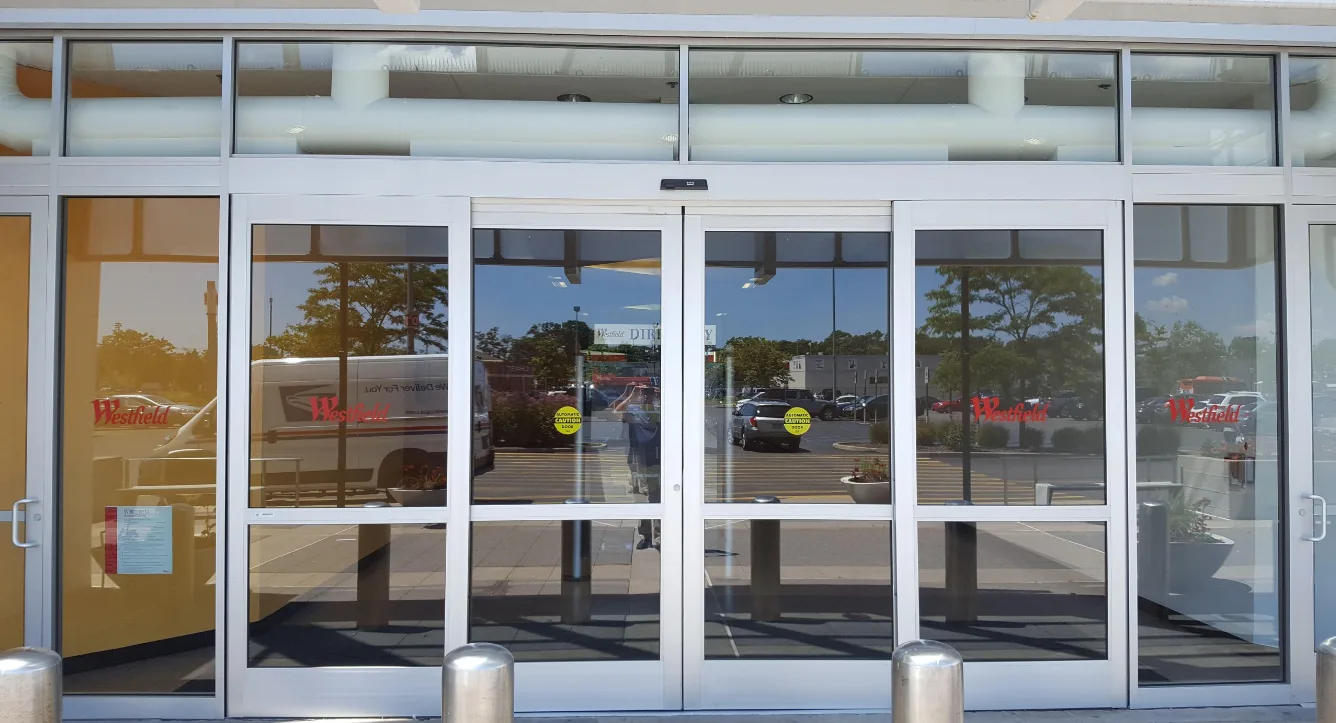
This is the bad-news scenario. Florida buildings settle, especially the older concrete-block storefronts in old-town Fort Pierce and the strip centers along US-1 in Port St. Lucie. When the frame racks even 1/4 inch out of square, a perfectly-functioning door, closer, and hinge will still fail to seat.
How to spot frame movement:
If the frame is the problem, no amount of closer adjustment will fix it - you'll spend three months chasing the same symptoms. The real fix is either re-shimming the frame, replacing the frame entirely, or in mild cases, machining the door edge to match the new geometry. We can usually tell within 5 minutes on-site which path makes financial sense.
What it actually costs to fix this in 2026, from our truck rates across Port St. Lucie, Stuart, Fort Pierce, and the Treasure Coast:
We quote on-site, in writing, before any work starts. Zero "diagnostic surprise" pricing.
If you're handy with a screwdriver and the door just slams or undershoots, try the closer valve adjustment first - it's a five-minute, zero-cost fix that solves about a third of these calls.
Call Doctor Lockout when:
For after-hours storefront emergencies anywhere from Hutchinson Island down to Palm City, we run 24/7. Most PSL calls get a tech rolling within 15 minutes, on-site within 30. See our storefront door lock service page or the after-hours locksmith overview.
An LCN 4040 properly installed and adjusted will run 15-25 years even in Florida humidity. A Norton 7500 averages 8-15 years. A budget aluminum closer (under $150 retail) often fails in 3-5 years on the coast. Salt air on Hutchinson Island and the barrier islands cuts these lifespans by roughly 30%.
You can, but the closer's arm geometry must match your door's mounting style (top jamb, parallel arm, regular arm, or track). Wrong arm style on a heavy storefront door will either overload the closer (kills it in 6 months) or under-power it (door never latches). For a residential or light commercial swing door, DIY is fine. For an aluminum-and-glass storefront, the cost of getting it wrong is a $400 closer replaced twice plus damaged threading in the frame.
Florida temperature and humidity swings. Hydraulic closer fluid thickens when the morning AC is running and thins as the building heats up. A closer adjusted for 70F won't behave the same at 95F. The fix is usually a fluid-grade swap (cheap) or, on closers older than 12 years, replacement. Wooden doors in coastal humidity also swell during the day and shrink at night.
Repair only makes sense if the closer is under 8 years old and the failure is a worn seal or bent arm. Cracked body, lost fluid, or stripped spring means replacement. A fresh LCN 4040 installed runs $485-$595; a so-called repair on a closer that has been failing for years usually costs $200+ and lasts another year before it dies anyway. We tell customers honestly: if the closer is 12+ years old, replace.
Yes. A door that won't latch automatically fails most commercial property insurance walk-throughs and is a hard-no on fire-code-rated openings. If your insurance carrier (or the City of Port St. Lucie inspector) is coming, get the closer and latch fixed first. A note from a licensed locksmith documenting the repair satisfies most underwriters.
15-30 minutes for most addresses in Port St. Lucie, St. Lucie West, Tradition, and Fort Pierce during business hours. 20-40 minutes for Stuart, Jensen Beach, Palm City, and Hutchinson Island. After hours and weekends, add 10-15 minutes for the dispatch ramp-up. We carry LCN 4040, Norton 7500, Sargent 281, pivots, continuous hinges, and Pemko thresholds on every commercial-rated truck so 90% of jobs finish in one visit.
Doctor Lockout runs 24/7 across the Treasure Coast. Real person on the phone in under 2 rings, locksmith on-site in 15-30 minutes, honest quote before any work starts.
Call (772) 284-5142Doctor Lockout serves Port St. Lucie and the entire Treasure Coast 24 hours a day, including these neighborhoods and surrounding cities:
Last updated: 2026-05-18